
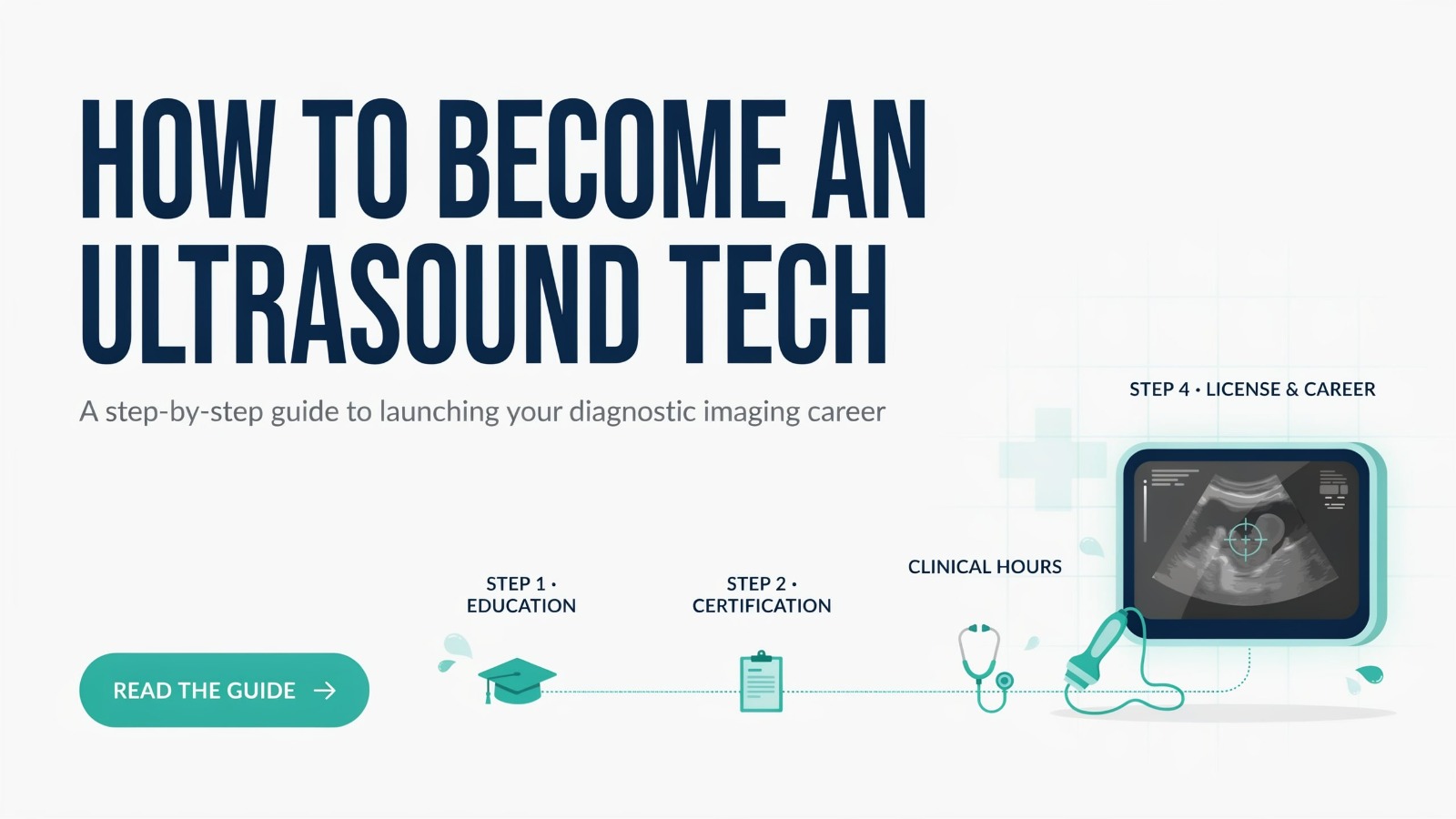
Healthcare careers are still labelled as the top growing profession around the world, and one of the best career paths is becoming an ultrasound technician. How to become an ultrasound tech is a slightly different question that we are here to answer! Being a physician eliminates many of the most frustrating aspects of patient care while still reserving those elements that are rewarding with some of the most advanced medical technology available.
Ultrasound technicians, or diagnostic medical sonographers (DMS) as proper nomenclature states, utilize imaging equipment to produce images of organs, tissues, blood vessels and unborn babies in much clearer detail. These images give physicians meaning to base their decision making on when diagnosing medical conditions, monitoring pregnancies and determining treatment decisions.
With hospitals and health care facilities expanding diagnostic imaging services, the need for qualified professionals is booming. As old as our population is, with the growing use of non-invasive imaging procedures all around us, ultrasound technicians will continue to be in big demand according to industry trends.It will walk you through the ins-and-outs of becoming an ultrasound tech, including: that of education requirements, certifications, essential skills needed (79% chance you pass), expected salaries, career advancement & practical life tips for success long-term.
What Is an Ultrasound Tech?
Understanding the Profession Before Learning How to Become an Ultrasound Tech. An ultrasound tech is trained in the use of ultrasound imaging equipment that creates live images of internal organs, muscles, tissue and blood flow. The doctors use these images to diagnose diseases and monitor therapy in patients without exposing them to radiation.
Ultrasound imaging otherwise known as sunography is safer than other medical imaging modality available today which uses high-frequency sound waves instead of X-ray.
An ultrasound technician carpets with doctors, nurses and patients to ensure high quality diagnostic images are captured correctly and safely.
What Does an Ultrasound Tech Do?
Another essential step to know how to become an ultrasound technician is understanding the daily duties.A typical workday may include:
- Preparing patients for ultrasound examinations
- Explaining imaging procedures clearly
- Operating ultrasound machines
- Capturing high-quality diagnostic images
- Monitoring image quality during scans
- Recording patient information
- Communicating findings to physicians
- Maintaining imaging equipment
- Following infection control procedures
- Emotional support to anxious patients
All these examinations need high level of technical knowledge, immense patience and very good communication skills.
Why Choose a Career as an Ultrasound Tech?
With its outstanding job stability, good salaries, and fulfilling work; this is a profession that many students searching for how to become an ultrasound tech end up deciding on pursuing.
Some great benefits of:
Strong Job Growth
The healthcare industry continues to grow year on year, resulting in a higher demand for professionals specialized in skillset of diagnostic imaging.
Competitive Salary
Ultrasound technicians tend to be paid well, with many opportunities for combining overtime and career advancement.
Meaningful Work
Each ultrasound helps diagnose an illness, tracks the course of a pregnancy, or assists physicians in planning patient treatment.
Multiple Specializations
Once you become experienced, you can choose to narrow your focus into different medicine fields, leading to more expert knowledge and substantially larger salaries.
Flexible Work Settings
Professionals can work in hospitals, imaging centers outpatient clinics, emergency departments, physician offices or mobile imaging facilities.
Essential Skills You Need
Razavizadeh If you’re serious about how to become an ultrasound tech, learning the right skills is just as important as finishing your education.
Communication Skills
Medical procedures make patients anxious. You train them on what happens during the examination and how to be comfortable in the process.
Technical Skills
Control of the ultrasound apparatus will aim precision and a constant updates as far as imaging technology is concerned.
Attention to Detail
And even small differences in imaging could inform a physician’s diagnosis. Performing the image capture in a careful manner is critical for obtaining good results.
Physical Stamina
Most of the latter portion of an ultrasound techs day will be spent standing and assisting patients into various positions, all while moving equipment to obtain images.
Critical Thinking
Different patients present with different clinical scenarios. Additionally, good problem-solving skills enable technicians to modify the scanning technique based on the scenario and vice versa.
Compassion
We are professionals interfacing with patients at and during very stressful times. If you want to draw a real conclusion, simply for the sake of science: The incorporation of empathy and professionalism is additional added value that defines higher-quality patient experience.
Different Types of Ultrasound Tech Specializations
An ultrasound technician has a chance to become more specialized in a particular area of medicine.Common specialties include:
Obstetric and Gynecologic Sonography
Emphasizes pregnancy monitoring, fetal development and women’s reproductive health
Abdominal Sonography
Covers the liver, kidneys, pancreas, spleen and gallbladder.
Cardiac Sonography
This specialty is called echocardiography and helps evaluate the structure and function of the heart.
Vascular Sonography
Utilizes ultrasound technology to view arteries, veins, and blood flow.
Musculoskeletal Sonography
US is used to image (muscles, tendons, ligaments and joints) injuries and some medical conditions
Although the Ultrasound technicians are usually pretty skilled, selecting a specialty can help them to develop specialist skills and also open up further career opportunities.
Step 1: Earn a High School Diploma
Related: How to become an ultrasound tech Step 1: During High School
Students need to concentrate on:
- Biology
- Physics
- Chemistry
- Mathematics
- Anatomy (if available)
- Computer Science
This preparation will help make college healthcare courses more manageable.
Step 2: Complete an Accredited Ultrasound Tech Program
Once you have graduated from high school, the next step in finding out how to become an ultrasound tech is by pursing a degree in an accredited diagnostic medical sonography program. Such programs impart medical education and practical experience that allow for safe and competent practice in health-care environments.
Because most employers want to hire graduates from recognized programs, and because certification organizations often require you to graduate from an accredited school first, selecting an accredited one is an important factor.Common program options include:
Associate Degree
The most common route is to get an Associate of Applied Science (AAS) in Diagnostic Medical Sonography. The curriculum typically involves 18–24 months of both classroom and clinical training.
Bachelor’s Degree
Setting aside practical, job-specific training programs (which are increasingly in demand), the most typical level of college degree is a bachelor’s degree – four years and broader-based. This can create pathways down the road in leadership, education or dedicated imaging positions.
Certificate Programs
Certificate programs target people who have some healthcare experience previously, like nurses or radiologic technologists. These programs tend to be shorter because the students already have a medical background.
What Will You Study?
Your education will cover the theory as well as the practical side all up to October 2023. Typical subjects include:
- Human anatomy and physiology
- Medical terminology
- Diagnostic medical sonography
- Ultrasound physics
- Cross-sectional anatomy
- Patient care techniques
- Medical ethics
- Pathophysiology
- Obstetrics and gynecology
- Abdominal imaging
- Vascular imaging
- Cardiac imaging basics
These courses teach students to be able to do an accurate ultrasound examination in live patient settings.
Step 3: Complete Clinical Training
A very vital piece of becoming ultrasound tech is completing the supervised clinical training.Students work with real patients under certified sonographers—so, as students are learning theory in da class, the clinical rotations give them a chance to put what they’ve learned into practice.Students learn the following in clinical practice:
- Prepare patients for examinations
- Operate ultrasound equipment
- Capture diagnostic-quality images
- Maintain patient privacy
- Follow infection-control procedures
- Work with physicians and nurses
- Handle emergency situations professionally
Gaining this experience in the field, in hand, instills confidence and cultivates the skills needed that employers are looking for.
Step 4: Earn Professional Certification
Licensing requirements differ by location, but holders of a popular professional certification have better job prospects.Due to the fact that a certified ultrasound technician is established as possessing expert understanding and competence, several health care companies prefer or even necessitate this method of certification.
Certification exams typically evaluate:
- Patient care
- Safety procedures
- Ultrasound physics
- Image production
- Anatomy
- Clinical decision-making
Certification increases credibility and helps with salary potential.
Step 5: Apply for Your First Job
When you finish your training and license, you are all set to start searching for jobs as an ultrasound technician.Common employers include:
- Hospitals
- Outpatient imaging centers
- Physician offices
- Women’s health clinics
- Diagnostic laboratories
- Emergency departments
- Mobile imaging companies
- Specialty healthcare centers
Working in entry-level jobs will give you solid experience and also help you master more sophisticated methods of scanning
Where Do Ultrasound Techs Work?
One of the surprises in learning how to become an ultrasound tech is where you can work.Common work environments include:
Hospitals
The greatest number of ultrasound technicians are employed by hospitals. They allow you to work with a broad range of patients and cutting edge imaging equipment.
Diagnostic Imaging Centers
They are primarily service-centers for medical imaging, setting up regular, daytime schedules.
Physician Offices
Particular subspecialists in their own clinics do the ultrasound including some obstetricians, gynecologists, and vascular specialists.
Emergency Rooms
Ultrasound imaging is used in emergency departments for rapid diagnosis of injuries as well as life-threatening medical conditions.
Maternity Clinics
Obstetric ultrasound technicians typically work in prenatal care settings to oversee fetal growth and development through the course of pregnancy.The process of becoming an ultrasound tech can take anywhere from one to four years.
How Long Does It Take to Become an Ultrasound Tech?
It all takes place within your timeline of education:
- Certificate Programme (for qualifying healthcare professionals) — 12–18 months
- Associate Degree: 18–24 months
- Bachelor’s Degree: 4 years
The majority of new students select the associate degree track due to its combination of shorter training length and robust employment prospects.
How Much Does Ultrasound Tech School Cost?
Educational expenses vary from one organization to the next.Factors affecting tuition include:
- Public vs. private colleges
- Community colleges
- State residency
- Degree level
- Additional laboratory fees
- Clinical training expenses
- Books and learning materials
Scholarships, grants, financial aid and tuition reimbursement all help students keep costs down.
Job Outlook for Ultrasound Technicians
This profession is an excellent career option because healthcare continues to be a very expansive industry.Here are a few reasons behind the sprouting demand:
- Aging populations
- Advances in medical imaging
- Use of more noninvasive diagnostic tests
- Expanded access to healthcare services
- Increased awareness of preventive care
Thus, demand for qualified ultrasound technicians should continue in hospitals and other health facilities.
Ultrasound Tech Salary
The earning potential is very attractive and one of the biggest reasons people search od how to be an ultrasound tech. Relative to many careers that only take 2 years in college, diagnostic medical sonography offers high pay rates.
Your salary is dictated by multiple things, such as:
- Education level
- Professional certifications
- Years of experience
- Geographic location
- Medical specialty
- Employer type
- Shift differentials and overtime
Those who work in large hospitals or specialized imaging centers tend to earn more than those employed by smaller clinics.
Average Salary by Experience
| Experience Level | Estimated Annual Salary |
|---|---|
| Entry-Level | $55,000–$70,000 |
| Mid-Level | $70,000–$90,000 |
| Experienced | $90,000–$110,000+ |
Note: Salaries vary by state, employer, certifications, and experience.
States That Often Offer Higher Salaries
Others in fact offer higher salaries based on greater demand and cost of living.
Examples include:
- California
- Washington
- Oregon
- Massachusetts
- New York
- Hawaii
- Alaska
Salary is an important factor when you think about how to become an ultrasound tech, but this can vary widely by location.
Career Advancement Opportunities
You Do Not Have To End Your Ultrasound Career At The Entry Level More junior opportunities become available the more seasoned you are.
Possible career paths include:
Lead Sonographer
Oversees/imaging staff, schedules,and monitors quality of service.
Clinical Instructor
Instructs ultrasound students during laboratory sessions and clinical rotations.
Department Manager
This includes overseeing the imaging department, which is responsible for budgeting, staffing and workflow management.
Application Specialist
Partners with manufacturers of ultrasound equipment in order to teach healthcare professionals on new imaging systems.
Healthcare Administration
Others with more formal experience transition into these hospital leadership and administrative positions.
Skills That Make You a Successful Ultrasound Tech
The first thing you need to figure out is how to become an ultrasound tech. Your professional skills will need refinement if you want long-term success.
Communication
Each day you will get to engage with patients of all ages and cases.
Technical Knowledge
To get diagnostic images with the accuracy, thorough knowledge regarding ultrasound equipment and imaging technique is imperative.
Critical Thinking
Every patient is unique. Ultrasound technicians typically need to alter scanning methods for a patient according to their medical history and requests from the physician.
Attention to Detail
An image acquisition may not risk a diagnosis, unless you make a minor mistake.
Compassion
Patients might experience anxiety or discomfort. Showing concern enhances their experience, and it inspires trust.
Professionalism
Ultrasound technicians are professionals who keep confidentiality, ethics, and lots of teamwork.
Advantages of Becoming an Ultrasound Tech
All of them have their own reasons why they want to pursue this career in health profession.
Excellent Job Stability
The integration of western medicine and herbal clinical practitioners continues to be a fundamental portion of no longer solely ancient Western healthcare.
Strong Salary Potential
Ultrasound and Sonogram technicians enjoy a competitive income, with opportunities for overtime and advancement.
Short Educational Path
Compared to many healthcare professions, it can often be completed in about two years.
Variety of Specialties
Specialties that you can choose to pursue include cardiac, vascular, abdominal, pediatric, musculoskeletal and obstetric sonography.
Meaningful Work
Ultrasound technicians find pleasure in assisting physicians to more accurately determine a diagnosis and monitor the health of patients, creating positive change in people’s lives.
Challenges of the Profession
No career is without its challenges and to know how to become an ultrasound tech, it is better that you also understand the possible pitfalls of this path.
Some common challenges include:
- Standing for long periods
- Moving and positioning patients
- Working weekends or night shifts
- Managing busy schedules
- Handling emergency examinations
- Keeping up with new technology
- Maintaining consistent image quality
Although there may be some drawbacks, many find it to be a rewarding career as they are working in direct patient care.
Tips for Career Success
If you are wondering how to become an ultrasound tech for real, here are the practical tips people share to help you build a successful career.
- Choose an accredited sonography program.
- Have a good understanding of anatomy and ultrasound physics.
- Practice communication skills with patients.
- Get all the clinical experience that you can.
- Earn professional certifications.
- Learn more about the new imaging technology.
- Join professional healthcare organizations.
- Develop teamwork and problem solving ability.
Grounded technicians with professionalism, attention to detail and a desire to learn will always earn employers respect.
Pros and Cons
| Pros | Cons |
|---|---|
| High earning potential | Long working hours |
| Strong job demand | Physically demanding |
| Short training period | Shift and weekend work |
| Meaningful healthcare career | Emotionally challenging cases |
| Multiple specialization options | Risk of repetitive strain |
Frequently Asked Questions (FAQs)
Is becoming an ultrasound tech difficult?
While it may take some time, most students complete their training to become an ultrasound tech in two years. If you love science, healthcare and interaction with people, this is a tractable career.
How long does it take to become an ultrasound tech?
It varies based on what route you take for your education.
- 12–18 months (for qualifying healthcare professionals) Certificate of Completion
- Associate Degree: 18–24 months
- Bachelor’s Degree: Around 4 years
The majority of students earn an associate degree because it is the type of education most employers expect.
Do ultrasound techs need certification?
Certification requirements vary between employers and locations, but most healthcare facilities prefer to hire certified personnel. Certified individuals prove their competencies, find better job opportunities and earn higher.
Can I become an ultrasound tech without a college degree?
Most employers look for candidates with formal education from an accredited diagnostic medical sonography program. Generally, you cannot work as an ultrasound technician with just a high school diploma.
Is ultrasound technology a good career?
Yes. You may be wondering how to become an ultrasound tech, and a lot of the research revolves around this career path because it provides:
- Excellent job stability
- Competitive salaries
- Career advancement opportunities
- Flexible work environments
- An opportunity to improve the lives of patients
What subjects should I study in high school?
The students aspiring to be Ultrasound Technicians are expected to concentrate on:
- Biology
- Chemistry
- Physics
- Mathematics
- Anatomy
- Computer Science
These subjects form a solid base for healthcare learning.
Can ultrasound techs specialize?
Yes. Ultrasound technicians can choose to gain experience in:
- Obstetric and Gynecologic Sonography
- Cardiac Sonography
- Vascular Sonography
- Pediatric Sonography
- Musculoskeletal Sonography
- Abdominal Sonography
Having specialization in life gives you more command and options in terms of career.
Is there a demand for ultrasound techs?
Yes. Even as diagnostic imaging services are growing, the need for trained ultrasound techs continues to remain constant. Moreover, long-term career growth is driven by ongoing advancements in medical technology and an aging population.
Final Thoughts
If you’re wondering how to become an ultrasound tech, this entry-level career path serves up a wonderful combo platter of job security, a great salary, opportunities for career advancement and the rewarding satisfaction of helping patients. There are a path to success in diagnostic medical sonography by completing an accredited educational program, gaining clinical experience, obtaining professional certification, and working to keep your skills sharp.
An ultrasound technician trained to gather the right diagnostic images for physicians to help them make decisions in a medical environment is still needed in healthcare. This profession can support your personal fulfillment and much leverage for the future, from working either in a hospital or outpatient clinical settings or at any specialized imaging center. If working in healthcare, technology and helping others sounds interesting to you, learning how to become an ultrasound tech could be one of the best career moves ever.